
Yealink T42S Manual: A Comprehensive Guide
This comprehensive guide details the Yealink T42S IP phone’s features, including call handling, customization, and troubleshooting,
for models like T42G, T43U, and the T42S Ultra Elegant.
The Yealink T42S is a sophisticated, ultra-elegant business IP phone designed to enhance communication efficiency; This manual serves as a detailed resource for users of the T42S, as well as compatible models like the T42G and T43U. It provides a thorough understanding of the phone’s capabilities, from basic call handling to advanced features and customization options.

Designed for modern business needs, the T42S boasts improved hardware, including increased flash memory, and a user-friendly interface. The on-screen menu system eliminates the need for manual labeling of programmable keys, streamlining the user experience. This guide will empower you to effectively manage calls, personalize settings, and troubleshoot common issues, maximizing your investment in Yealink technology.
Unboxing and Initial Setup
Upon receiving your Yealink T42S, carefully unpack the box and verify that all components are present. Typically, this includes the phone itself, a handset, a network cable, and a power adapter. Before connecting, inspect the phone for any physical damage.
Initial setup involves connecting the network cable to your local network and the power adapter to a suitable power outlet. Once powered on, the phone will initiate its boot-up sequence. Follow the on-screen prompts to configure basic settings, such as network parameters and SIP account details. Ensure your network supports SIP protocol for successful registration and operation. Refer to your system administrator for specific configuration values.
Phone Overview: Physical Components
The Yealink T42S boasts a sleek, user-friendly design with several key physical components. The front panel features a high-resolution display screen providing clear call information and menu navigation. Below the screen resides the keypad, facilitating number input and menu selection.
Around the back and base of the phone, you’ll find essential ports for network connectivity (Ethernet), power, and potentially headset connections. The improved hardware includes increased flash memory for enhanced performance. The device is designed for easy desktop placement, offering a stable and accessible communication solution for business environments.
Keypad and Navigation
The Yealink T42S keypad is central to phone operation, enabling number dialing and menu traversal. Dedicated keys provide quick access to essential functions like call hold, transfer, and the main menu. Navigation is intuitive, utilizing directional keys to move through on-screen options.
Programmable keys are a standout feature, allowing users to customize shortcuts for frequently used functions, eliminating the need for manual labeling. The screen displays the function assigned to each programmable key directly, enhancing usability. This streamlined approach simplifies call handling and boosts overall productivity within a business setting.

Display Screen Features
The Yealink T42S boasts a high-resolution display screen that delivers clear visibility of call information, menu options, and customizable features. The screen dynamically adapts, showing relevant details during active calls, such as caller ID, call duration, and hold status.
Multiple pages within the screen’s interface are accessible, particularly when configuring programmable keys. These values are displayed directly on the screen, removing the need for physical labels. This user-friendly design enhances efficiency and simplifies phone management. The screen’s brightness is adjustable, ensuring optimal viewing in various lighting conditions.
Ports and Connections

The Yealink T42S provides a range of ports for versatile connectivity. It features two 10/100 Mbps Ethernet ports, enabling network redundancy or connection to a switch and a PC simultaneously. A dedicated RJ11 port is available for connecting an analog telephone, expanding functionality.

Additionally, the phone includes a standard 3.5mm headset jack for private conversations and compatibility with various headsets. The USB port facilitates firmware updates and potential future accessory connections. These ports ensure seamless integration with existing office infrastructure and offer flexibility for diverse communication needs.
Basic Call Handling
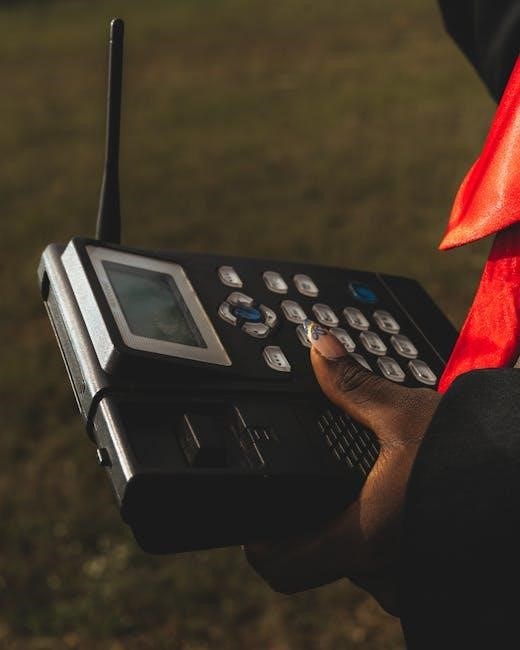
The Yealink T42S simplifies call management with intuitive features. Answering incoming calls is straightforward – simply press the answer/decline key. To initiate an outgoing call, dial the number using the keypad and press the send key. Utilize the hold function to temporarily pause a call, retrieving it later with a dedicated key press.
Muting a call is easily achieved during a conversation, ensuring privacy. The phone supports both the built-in speakerphone and headset connectivity for varied audio options. These basic functions provide a user-friendly experience for everyday communication needs, streamlining call workflows.
Answering Incoming Calls
When receiving a call on your Yealink T42S, the phone will display the caller ID, if available. A visual indicator, typically a flashing light on the phone, also alerts you to the incoming call. To answer, simply press the large, centrally located answer/decline key. This key is often green in color for easy identification.
Alternatively, you can use a connected headset to answer the call. The phone automatically switches audio to the headset. Ignoring the call can be done by pressing the same key again, which will typically result in sending the call to voicemail or disconnecting it.
Making Outgoing Calls
To initiate a call on your Yealink T42S, use the keypad to dial the desired phone number. The display screen will show the number as you enter it. Once the number is complete, press the send key – often depicted as a phone icon – to connect the call. The phone will then display the call status, indicating whether it is ringing, connected, or experiencing an error.
You can also utilize the phonebook feature, if configured by your system administrator, to quickly dial frequently called numbers. Speed dial keys can also be programmed for even faster access to important contacts. Ensure the correct line key is selected before dialing.
Call Hold and Retrieve
Placing a call on hold with the Yealink T42S is straightforward. During an active call, press the “Hold” key – typically represented by a pause symbol. This will put the current caller on hold, allowing you to answer another call or perform other tasks. The Hold key will illuminate to indicate an active hold.
To retrieve the held call, simply press the “Hold” key again. This will automatically reconnect you to the caller who was previously on hold. If multiple calls are held, you may need to select the desired call from a list displayed on the screen before retrieving it.
Muting and Unmuting Calls
The Yealink T42S provides a convenient mute function for privacy during calls. To mute your microphone, press the “Mute” key – often depicted as a crossed-out microphone icon. When muted, the other party will not be able to hear you. The Mute key will illuminate, visually confirming the muted status.
To restore audio transmission and un-mute your microphone, press the “Mute” key again. The indicator light will turn off, signifying that you are no longer muted and can communicate normally. This feature is useful for side conversations or when you need to temporarily silence your background noise.
Advanced Call Features
The Yealink T42S extends beyond basic call handling, offering powerful features for enhanced communication. Call Transfer allows you to seamlessly connect an active call to another extension. Conference Calling enables three-way conversations, facilitating group discussions and collaborative decision-making.
Call Forwarding redirects incoming calls to a designated number when you are unavailable. These features are typically accessed through softkeys during an active call or via the phone’s menu system. Mastering these advanced functions significantly boosts productivity and streamlines communication workflows within a business environment.
Call Transfer
Initiating a call transfer on the Yealink T42S is straightforward. During an active call, locate the “Transfer” softkey on the phone’s display. Pressing this key places the current caller on hold while prompting you to dial the extension or phone number of the recipient.
Once the recipient answers, you can announce the transfer. Pressing the “Transfer” key again completes the call connection to the new party; Alternatively, a “Warm Transfer” allows you to speak to the recipient before finalizing the transfer. This feature ensures a smooth handover and enhances the caller experience.
Conference Calling
The Yealink T42S facilitates efficient conference calls, allowing multiple participants to join a single conversation. To initiate a conference, first establish a call with the initial participant. Then, select the “Conf” or “Conference” softkey. This places the first caller on hold, prompting you to dial the next participant’s extension or number.
Repeat this process to add additional parties to the conference. You can manage participants, mute individual lines, and adjust volume levels during the call. The T42S supports a defined number of concurrent participants, ensuring clear audio quality for all involved. Ending the conference disconnects all parties simultaneously.
Call Forwarding
The Yealink T42S offers versatile call forwarding options, enabling you to redirect incoming calls to another extension or external phone number. Access the call forwarding settings through the phone’s menu, typically under “Features” or “Call Settings.” You can choose to forward all calls unconditionally, or only forward when the line is busy or unanswered.

Specify the destination number or extension to which calls should be forwarded. The T42S allows for different forwarding rules based on your needs. Remember to deactivate call forwarding when it’s no longer required to ensure calls reach your intended destination. This feature enhances accessibility and ensures you never miss important communications.

Customization Options
The Yealink T42S provides extensive customization options to tailor the phone to your preferences and workflow. Adjust volume levels for the handset, speakerphone, and headset to optimize audio clarity. Personalize your calling experience by setting preferred ringtone options from a selection of available tones.
A key feature is the programmable keys configuration; assign frequently used functions like speed dial or call transfer directly to these keys for quick access. The T42S eliminates the need for manual labeling with on-screen programming. These customizations enhance usability and streamline daily tasks, improving overall efficiency.
Adjusting Volume Levels
The Yealink T42S allows precise control over audio output through adjustable volume levels. Users can independently modify the volume for the handset, speakerphone, and headset. To adjust, navigate to the settings menu and select the “Volume” option. Utilize the up and down arrow keys, or the volume control buttons on the phone’s interface, to increase or decrease the desired level.
Ensure optimal audio clarity for each mode. Experiment with different settings to find the most comfortable and effective volume for various environments and communication needs. Proper volume adjustment enhances call quality and user experience.
Setting Ringtone Preferences
Personalize your Yealink T42S with customizable ringtone options. Access the settings menu and navigate to the “Ringtone” selection to modify incoming call alerts. The phone offers a variety of pre-loaded ringtones to choose from, allowing users to select a sound that best suits their preferences. You can preview each ringtone before applying it.
Beyond pre-sets, some models may support uploading custom ringtones. Adjust the ringtone volume independently for optimal audibility; Setting a distinctive ringtone helps quickly identify incoming calls and enhances the overall user experience.

Programmable Keys Configuration
The Yealink T42S features programmable keys for streamlined call handling. These keys can be customized to directly access frequently used functions, enhancing efficiency. Through the phone’s interface, assign specific actions like speed dial, call transfer, or conference calling to each key.
Unlike older models requiring manual labeling, the T42S displays function names directly on the screen, eliminating the need for physical labels. This dynamic configuration adapts to user needs, improving workflow. Reassign keys easily as requirements change, maximizing the phone’s versatility and user convenience.
Navigating the User Interface
The Yealink T42S boasts an intuitive user interface designed for ease of use. Accessing the main menu is typically done via the ‘Menu’ or ‘Settings’ key on the keypad, revealing a range of options. The interface utilizes a clear, hierarchical structure, grouping related functions logically.
Menu options include call settings, feature codes, network configurations, and personalization preferences. Navigation is primarily achieved using the directional keys and the ‘OK’ button to select. Familiarize yourself with the menu layout to quickly locate and adjust settings, optimizing your calling experience.
Accessing the Main Menu
To access the main menu on your Yealink T42S, locate and press the dedicated ‘Menu’ key on the phone’s keypad. This action will display a list of primary options on the screen, providing access to various settings and functionalities. Alternatively, some models may utilize a ‘Settings’ key for the same purpose.
The menu interface is designed for straightforward navigation. Use the directional keys – up, down, left, and right – to highlight your desired menu item. Press the ‘OK’ or ‘Select’ key to enter the selected menu, where you can further explore and configure specific features.
Understanding Menu Options
The Yealink T42S main menu presents a range of options, including Call Features, Settings, and Contacts. ‘Call Features’ allows access to functions like call transfer, conference calling, and call forwarding. ‘Settings’ enables customization of phone preferences, such as volume, ringtone, and display settings.
Within ‘Settings’, you’ll find options for network configuration, date/time adjustments, and programmable key assignments. The ‘Contacts’ menu, if enabled by your system administrator, provides access to your phonebook. Navigating these options is intuitive; use the directional keys and ‘OK’ button to select and modify settings as needed.
Troubleshooting Common Issues
Encountering problems with your Yealink T42S? A common issue is ‘No Dial Tone’ – verify the network cable connection and ensure the phone is properly registered with your VoIP server. ‘Poor Audio Quality’ can stem from network congestion or incorrect codec settings; check your network and consult your administrator.
If the ‘Phone Not Registering’, double-check your account credentials (username, password, and server address) within the phone’s settings. Ensure these details match your service provider’s information precisely. A reboot of the phone can often resolve temporary glitches. If issues persist, contact your IT support or service provider;
No Dial Tone
Experiencing a ‘No Dial Tone’ issue on your Yealink T42S? This typically indicates a problem with the network connection or phone registration. First, meticulously check the physical network cable, ensuring it’s securely connected to both the phone and the network port. Verify the cable isn’t damaged.
Next, access the phone’s settings and confirm it’s successfully registered with your VoIP server. Incorrect account credentials (username, password, or server address) are frequent causes. A simple reboot of the phone can sometimes resolve temporary network glitches. If the problem continues, consult your network administrator or service provider for assistance.
Poor Audio Quality
If you’re encountering poor audio quality with your Yealink T42S, several factors could be at play. Begin by checking your headset or speaker connection, ensuring it’s firmly plugged in. Test with a different headset to rule out a faulty device. Verify your network connection’s stability; a weak or congested network can cause packet loss and distorted audio.
Within the phone’s settings, explore audio codecs. Experimenting with different codecs (like G.711 or G.729) might improve clarity. Also, check for and address any potential interference from nearby electronic devices. If issues persist, contact your IT support or VoIP provider for further diagnosis.
Phone Not Registering
If your Yealink T42S fails to register with the VoIP server, the first step is verifying network connectivity. Ensure the phone has a valid IP address and can access the internet. Double-check the account settings configured on the phone – username, password, and server address – for accuracy. Incorrect credentials are a common cause of registration failures.
Confirm that your VoIP provider’s service is operational and that your account is active. Examine the phone’s logs for specific error messages, which can provide clues about the issue. A firmware update might resolve compatibility problems. If problems continue, consult your IT administrator or VoIP provider for assistance.
Firmware Updates
Keeping your Yealink T42S firmware up-to-date is crucial for optimal performance, security, and compatibility. Yealink regularly releases updates that address bugs, enhance features, and improve overall system stability. To check for updates, access the phone’s settings menu, typically under “System” or “Maintenance.” The phone will automatically connect to Yealink’s servers to scan for available versions.
Before initiating an update, ensure a stable network connection. The update process should not be interrupted. Follow the on-screen prompts carefully. A failed update could render the phone unusable, so proceed with caution. Yealink also offers device management services (YMCS/YDMP) for centralized firmware deployment.
Checking for Updates
To verify if a new firmware version is available for your Yealink T42S, navigate through the phone’s menu system. Typically, you’ll find the update check option within “Settings,” then “System,” or a similar “Maintenance” section. Select the “Check for Updates” function. The phone will then connect to Yealink’s servers and compare your current version against the latest release.
The interface will display the results, indicating whether an update is available. If an update is found, the phone will provide details about the new version. It’s recommended to check regularly, as Yealink frequently releases updates to enhance performance and security.
Performing a Firmware Update
Once an update is available, initiating the process is straightforward. After confirming the update, select “Download” or “Update” within the phone’s interface. Ensure a stable network connection throughout the entire process to prevent interruptions. The phone will download the new firmware and automatically begin the installation.
Do not power off the device during the update! A progress bar will indicate the installation status. The phone will reboot automatically upon completion. This process may take several minutes. Following the reboot, verify the new firmware version in the “Settings” menu to confirm a successful update.
Yealink Device Management Services (YMCS/YDMP)
Yealink offers centralized management platforms: YMCS (Yealink Management Cloud Service) and YDMP (Yealink Device Management Platform). These services streamline the administration of your Yealink T42S phones, enabling remote configuration, firmware updates, and troubleshooting.
YMCS is a cloud-based solution, offering accessibility from anywhere with an internet connection. YDMP is an on-premise deployment option for organizations preferring local control. Yealink frequently provides free trial programs for these services, allowing you to experience their benefits firsthand before committing to a subscription. Explore these options for efficient device management.
Resetting the Yealink T42S
The Yealink T42S offers two reset options: a soft reset and a factory reset. A soft reset simply restarts the phone, clearing temporary data and resolving minor glitches – akin to rebooting a computer. This doesn’t affect your settings.
A factory reset, however, restores the phone to its original, out-of-the-box state, erasing all personalized configurations, accounts, and data. This is useful for troubleshooting persistent issues or preparing the phone for a new user. Be sure to back up any critical settings before performing a factory reset, as the process is irreversible.

Soft Reset vs. Factory Reset
Understanding the difference between a soft and factory reset is crucial for Yealink T42S maintenance. A soft reset is a simple reboot, resolving temporary issues without data loss – similar to restarting your computer. It’s quick and non-destructive, ideal for minor glitches.
Conversely, a factory reset returns the phone to its original factory settings, deleting all user data, accounts, and customizations. This is a more drastic measure, best used when troubleshooting significant problems or preparing the device for a new user. Always back up important data before initiating a factory reset, as it’s irreversible.
Technical Specifications
The Yealink T42S boasts enhanced hardware, notably increased flash memory for improved performance and feature support. It supports SIP protocol, offering compatibility with various IP-PBX systems. The display is a 3.7-inch graphical LCD, providing a clear view of call information and menu options.
Connectivity includes dual Gigabit Ethernet ports for reliable network access. Power is supplied via Power over Ethernet (PoE), simplifying deployment. The T42S supports HD voice quality, ensuring clear audio during calls. It also features programmable keys, allowing users to customize their phone for efficient call handling.
Safety Precautions
To ensure safe operation of your Yealink T42S, avoid placing it near water or excessive humidity. Do not expose the device to extreme temperatures or direct sunlight, as this may cause damage. Use only the provided power adapter or a compatible PoE power source.
Avoid disassembling the phone; there are no user-serviceable parts inside. If cleaning is required, disconnect the power and use a soft, dry cloth. Do not use abrasive cleaners or solvents. Ensure proper ventilation around the device to prevent overheating. Follow all local electrical safety regulations during installation and operation.
Leave a Reply
You must be logged in to post a comment.